Defensive Skiing With Kids: Ski Safety Habits for Families

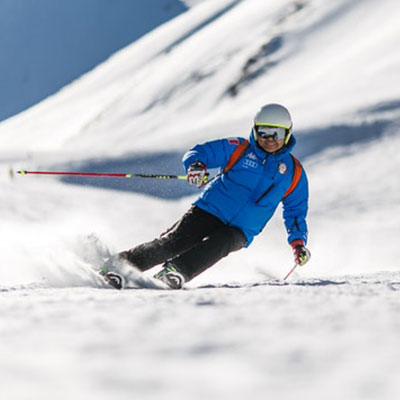
Defensive driving means assuming other people might make mistakes and leaving yourself room to react. Defensive skiing works the same way, and it matters even more when you have small kids with you. Children are short, hard to see from above, sometimes unpredictable, and much lighter than the adults who might ski into them.
This guide turns the official skier rules into simple family habits: how to read a slope, where to stop, how to space out a group, and how to keep a little one out of the way of fast uphill skiers. Use it to set your family’s ground rules before the 2026–27 season.
Start With Your Responsibility Code
In the US, the National Ski Areas Association (NSAA) publishes Your Responsibility Code, the basic rules of the slopes that you will see posted at ski areas. The current version, updated in 2022, has ten points (it used to have seven). It opens with a reminder that winter sports involve risk of serious injury or death, and that your knowledge, decisions and actions contribute to your safety and that of others. The ten points are:
- Always stay in control. You must be able to stop or avoid people or objects.
- People ahead or downhill of you have the right-of-way. You must avoid them.
- Stop only where you are visible from above and do not restrict traffic.
- Look uphill and avoid others before starting downhill or entering a trail.
- You must prevent runaway equipment.
- Read and obey all signs, warnings, and hazard markings.
- Keep off closed trails and out of closed areas.
- You must know how and be able to load, ride and unload lifts safely. If you need assistance, ask the lift attendant.
- Do not use lifts or terrain when impaired by alcohol or drugs.
- If you are involved in a collision or incident, share your contact information with each other and a ski area employee.
Kids can learn these too. Pick two or three at a time and turn them into short family phrases, for example “Downhill people go first”, “Stop at the side” and “Look up before you go”.
Defensive Skiing Habits for Families
1. Ski in control, especially in front of your kids
Children copy what they see. If you ski fast and close to others, they will too. Choose a speed at which you could stop before reaching anyone below you, and point out when you are slowing down for traffic. This is point 1 of the Code and the foundation of everything else.
2. Downhill skiers have the right-of-way
The person below you cannot see you. That makes avoiding them your job. Teach kids to give a wide berth when passing, to pass slowly, and never to cut close to a beginner or a smaller child. Remember that lower skiers, including your own kids, may turn suddenly.
3. Look uphill before starting or merging
Most family close calls happen at the moment someone pushes off or skis onto a new trail. Make “look uphill” a ritual every time your group starts moving, and at every trail junction. With young kids, do the looking for them and give a clear “go” when the slope above is clear.
4. Choose terrain everyone can handle
Pick runs that suit the least experienced skier in the group. A child struggling on terrain that is too steep loses control and stops in awkward places. Respect trail ratings and signs, keep off closed trails, and take extra care where trails merge or near terrain parks.
Where to Stop on the Slope
Point 3 of the Code says to stop only where you are visible from above and do not restrict traffic. In practice that means:
| Good places to stop | Places to avoid |
|---|---|
| At the side of the trail, out of the main flow | In the middle of the run |
| Where skiers above can clearly see you from a distance | Just below a rollover, ridge or blind drop |
| On wide, gentle sections with room to pass | Narrow cat tracks and pinch points |
| Below or beside a trail junction with clear sightlines | Right where two trails merge |
| Near the bottom of a lift line area, off to the side | At the unloading ramp of a chairlift |
Give your kids a simple rule: when the group stops, everyone goes to the same side of the trail and stands together. If a child falls in a bad spot, such as under a rollover, an adult should stop just above them, visible and to the side, so skiers coming down see an adult first and slow down.
Spacing and Group Order
A family strung across a run is hard to pass, and a family packed tightly together can collide with itself. A little structure helps:
- Leader in front: a confident adult picks the line, the speed and the stopping points.
- Kids in the middle: children follow the leader’s tracks, which keeps them on an easier line.
- Adult “sweep” at the back: the last adult stays uphill of the kids, watches traffic above, and helps with falls.
- Leave a gap: enough space between skiers that a sudden fall does not cause a pile-up.
- Regroup often: agree that the leader stops at every junction and waits until everyone arrives.
- Make a lost-child plan: agree on a meeting spot (for example the bottom of a specific lift) and make sure kids know a parent’s phone number. Teach them to ask a lift attendant or ski patroller for help if they are separated.
Protecting a Small Child From Uphill Skiers
Small children are low to the ground and easy to miss for a skier coming fast over a rise. A few habits make them more visible and better protected:
Ski just above or beside them
On busy runs, the adult who is not leading should ski slightly uphill and to the side of the child. Fast skiers coming down then see an adult first and have to steer around a bigger, more visible person. Some parents ski behind a young child using a ski harness on easy runs; see our best kids ski harnesses if you are considering one.
Use bright clothing
A brightly colored jacket or helmet makes your child easier to spot against snow and trees, especially in flat light. It also helps you find them in a crowd or a lesson group.
Pick quieter times and places
Busy afternoons and the main routes back to the base are often the most crowded. Ski the most crowded runs earlier, use designated slow zones and family areas where the resort has them, and avoid narrow, fast connector trails with young kids.
Teach them to hold their line
Young kids sometimes swerve suddenly across the whole run. Teach them to make turns in a consistent “lane” behind the leader and to look uphill before any big change of direction or before crossing the trail.
Helmets: Part of the Plan, Not the Whole Plan
A helmet is standard gear for kids on the slopes. Look for a ski helmet certified to a snow sport standard (in the US, commonly ASTM F2040; in Europe, EN 1077), and make sure it fits: snug all around, sitting level on the forehead, buckle fastened, with no gap between helmet and goggles. Replace it after a significant impact.
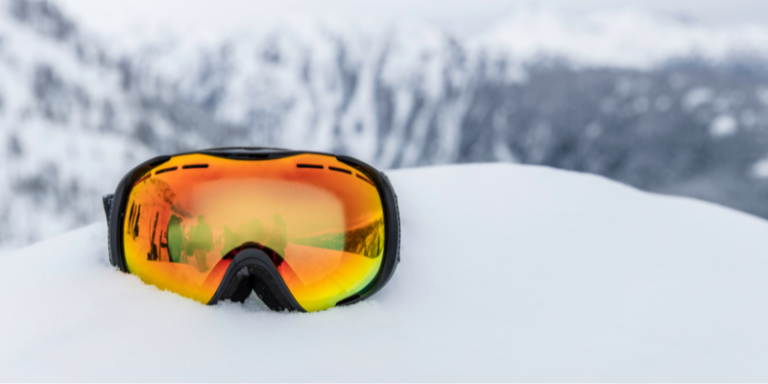
Our kids ski helmet size guide explains how to measure, and our best ski helmets for kids lists good options. Goggles that fit with the helmet matter too; see the best ski goggles for kids.
Still, a helmet does not replace good habits. Skiing in control, smart stopping and good spacing prevent collisions in the first place.
Lift and Equipment Habits
- Prevent runaway equipment: make sure ski brakes work, and lay skis flat or with the bindings down when kids take them off on a slope.
- Loading lifts: help small kids load, sit back, and lower the restraint bar if the chair has one. Ask the lift attendant to slow the lift if needed.
- Unloading: ski away from the unloading ramp promptly before stopping to regroup.
- Gear check: have kids’ bindings set by a qualified ski shop technician and re-checked when they grow or change boots.
If a Collision or Fall Happens
Stay calm. Protect the injured person by placing crossed skis upright in the snow above them or having someone stand uphill to warn others, then alert ski patrol (via a lift attendant, the resort’s emergency number or another skier). Point 10 of the Code asks everyone involved in a collision or incident to share contact information with each other and a ski area employee. Any child who has hit their head, or seems confused, dizzy or unusually sleepy, should stop skiing and be checked by patrol or a doctor.
Defensive Skiing FAQ
What is defensive skiing?
Defensive skiing means anticipating what other skiers might do, keeping your speed under control, stopping in visible spots and leaving space so you can react. It’s the skiing version of defensive driving.
How many points are in the NSAA Responsibility Code?
The current Your Responsibility Code, updated by the NSAA in 2022, has ten points. The older version had seven.
Who has the right-of-way on a ski slope?
People ahead of you or downhill of you have the right-of-way. Skiers coming from above must avoid them.
Where should my family stop on a run?
At the side of the trail where you’re visible from above and not blocking traffic. Never stop below a rollover, in a narrow section or where trails merge.
At what age can kids learn the Responsibility Code?
As soon as they’re skiing. Young kids can learn simple versions like “look uphill” and “stop at the side”, and older kids can learn all ten points.