Skiing Reviews: Complete Guide to Choosing the Right Gear

There are thousands of skiing reviews online, and many of them disagree. This guide shows you how to read them for the 2026–27 season: which specs actually matter for each piece of gear, which review red flags to watch for, and where your money makes the biggest difference.
Quick answer
- Fit first: boots, helmet, goggles and gloves must fit you – no review can replace trying them on.
- Match the gear to your level: softer and more forgiving for beginners, stiffer and more stable for experts.
- Spend on boots, then helmet and goggles. Skis are the easiest item to rent while you learn.
- Trust patterns, not single reviews: repeated comments about leaks, sizing or fogging are the most useful signal.
How to Read Skiing Reviews
A good review tells you who the product is for, not just whether the reviewer liked it. Before you trust any skiing review, ask:
- Who is the reviewer? An expert who skis fast on steep terrain will call a beginner ski “too soft” – which may be exactly what you need.
- Where do they ski? Icy East Coast groomers and deep Rocky Mountain powder need very different skis.
- What size and model year? Brands change construction between seasons, and a different length can feel like a different ski.
- How long have they used it? A first-day impression says little about warmth after a season or waterproofing after washing.
- Are the cons specific? Real reviews mention concrete downsides. Reviews with no downsides at all are less useful.
Red flags in reviews
- Lots of five-star reviews posted in a short time, with similar wording.
- Reviews about delivery or packaging instead of the product.
- Claims like “warmest glove ever” with no mention of temperatures or conditions.
- Comparisons between products built for very different skiers (a race ski vs a powder ski).
Skis: The Specs That Matter
Ski reviews usually describe a ski with three numbers (tip–waist–tail width in millimetres), a length, a turn radius and a profile. Here is what they mean:
| Spec | What it tells you | Rule of thumb |
|---|---|---|
| Waist width | How the ski handles hard snow vs soft snow | Narrower carves groomers; wider floats in powder |
| Length | Stability vs ease of turning | Shorter is easier to turn; longer is more stable at speed |
| Turn radius | The natural size of the ski’s turn | Short radius = quick turns; long radius = big, fast turns |
| Profile (camber/rocker) | Grip vs float and forgiveness | Camber grips on hard snow; rocker turns easily and floats |
| Flex | How much effort the ski needs | Softer for beginners, stiffer for strong skiers |
Our skiing comparison guide explains each ski type and width range in detail, and our picks are in Best Skis of 2026 and Best All-Mountain Skis for 2027.
Ski Boots: Flex and Fit
Boot reviews talk about flex – a number for how stiff the boot is when you lean forward. Higher means stiffer. There is no industry standard, so a 100 in one brand may feel different in another, but typical ranges look like this:
| Skier level | Men’s flex (typical) | Women’s flex (typical) |
|---|---|---|
| Beginner | about 60–90 | about 50–70 |
| Intermediate | about 85–110 | about 70–90 |
| Advanced / expert | about 110 and up | about 90 and up |
Fit matters more than flex. Boots are sized in mondopoint (foot length in cm), and width is given as a “last” in millimetres. If a review says a boot runs narrow or wide, take it seriously. See our picks for beginners, wide feet and narrow feet.
Ski Bindings: Release Range (DIN)
A binding’s job is to hold you in and release you in a fall. The release setting, still often called the DIN, is worked out from your weight, height, age, boot sole length and skier type using the ISO 11088 tables. When you read binding reviews, check that the binding’s DIN range comfortably covers your setting – lighter and beginner skiers need lower values, so a race binding that starts high is the wrong choice. Always have a certified technician mount, set and test bindings.
Ski Helmets: Certification and MIPS
Every helmet you consider should carry a safety certification. In the US the common snow-sports standard is ASTM F2040; in Europe it is EN 1077 (Class A covers more of the head, including the ears; Class B is lighter). Check the label inside the helmet.
MIPS is a low-friction layer inside some helmets designed to reduce rotational forces in an angled impact. It is an added feature, not a certification, so compare MIPS and non-MIPS helmets only after confirming both are certified.
Ski Goggles: Lens Category and VLT
Goggle reviews mention VLT (visible light transmission) – the percentage of light the lens lets through – and a lens category from S0 to S4. Exact boundaries vary slightly between brands, but roughly:
| Category | Approx. VLT | Best for |
|---|---|---|
| S0 | about 80–100% | Night skiing, very low light |
| S1 | about 43–80% | Snowing, overcast, flat light |
| S2 | about 18–43% | Mixed sun and cloud |
| S3 | about 8–18% | Bright sunny days |
| S4 | about 3–8% | Extreme brightness, glaciers (not for driving) |
If you ski in all weather, look for goggles with interchangeable lenses or a lens in the S1–S2 range. More detail: What does S1, S2, S3 mean on ski goggles?.
Ski Gloves: Warmth and Waterproofing
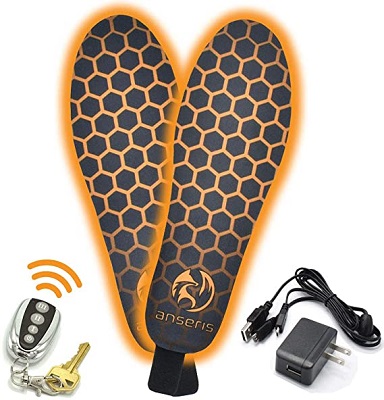
For gloves, the reviews that matter most mention temperature and conditions. Look for a waterproof insert or membrane, insulation type, a long gauntlet cuff and whether the glove fits with your jacket sleeve. Mittens are warmer than gloves; heated gloves help skiers with poor circulation. Our guide to what features to look for in ski gloves goes deeper.
Ski Jackets and Pants: What Reviews Should Tell You
Outerwear reviews are useful when they mention the conditions the jacket or pants were used in. Look for:
- Waterproof and breathable fabric with taped or sealed seams – wet snow and chairlift seats find every weak spot.
- Insulated or shell? Insulated jackets are simple for cold resorts; shells plus layers adapt better to changing weather.
- Ski-specific features: a powder skirt, helmet-compatible hood, pass pocket, pit zips and boot gaiters in the pants.
- Fit over layers: reviewers often mention whether a size runs small once a mid layer is underneath.
See our picks for men’s ski jackets, women’s ski jackets and men’s ski pants.
How to Compare Two Products Side by Side
- Write down your skier level, where you ski and your budget before you start reading.
- Compare the specs that matter for that item (the tables above) – ignore marketing names for technologies.
- Read the three-star reviews of both products. They usually describe real strengths and weaknesses without hype.
- Check the return policy and size chart. For boots, helmets and gloves, being able to exchange a size is worth a lot.
- If two products are close, choose the one that fits better or comes from a brand whose sizing you already know.
Best Value: Where to Spend and Where to Save
| Gear | Spend or save? | Why |
|---|---|---|
| Ski boots | Spend | Fit decides comfort, warmth and control; a bootfitter is worth it |
| Helmet | Spend on fit | Any certified helmet protects; pay for the one that fits your head |
| Goggles | Mid-range | A good lens and anti-fog coating matter; premium frames are optional |
| Gloves | Mid-range | Cheap gloves often leak; very expensive ones aren’t always warmer |
| Skis | Save at first | Rent or demo while you learn; buy when your style settles |
| Jacket and pants | Save or mid-range | Look for waterproof ratings; last season’s colours are often discounted |
| Base layers and socks | Mid-range | Merino or synthetic; avoid cotton |
For a full first-time packing list, see Skiing Essentials. For every review we have published, see our ski reviews hub.
Skiing Reviews FAQ
Are online skiing reviews reliable?
They are useful when you read many of them and look for patterns. Focus on reviewers who ski like you and on specific, repeated comments about fit, warmth and durability.
What is the most important piece of ski gear?
Boots. They transfer every movement to the ski, and a poor fit causes cold feet, pain and poor control. Buy boots that fit before you buy skis.
What flex ski boot should a beginner buy?
Most beginners do well with a softer flex – roughly 60–90 for men and 50–70 for women – but try boots on, since flex ratings vary between brands.
Do I need a MIPS helmet?
MIPS is an extra feature for rotational impacts. A certified helmet (ASTM F2040 or EN 1077) that fits well is the essential part; MIPS is a worthwhile upgrade if it fits your budget.
Which goggle lens is best for all conditions?
A medium S2 lens is the most versatile single lens. Skiers who see a lot of flat light or snow often prefer S1, or goggles with a second interchangeable lens.
Related guides: Ski Reviews Hub, Skiing Comparison, Best Skis of 2026, Best Ski Gloves, Best Ski Goggles